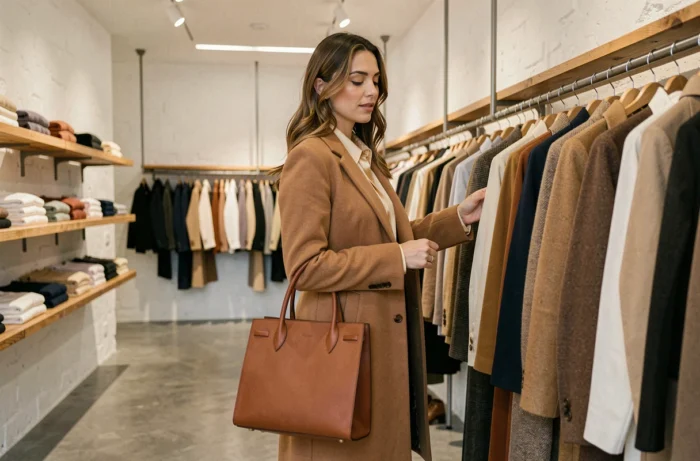
Personal style is built at the intersection of three interconnected areas: fashion, beauty and lifestyle. Each of these pillars has its own distinct dynamics, trend cycles and recent regulatory constraints that are changing the products available on the French market. Understanding these dynamics makes it easier to make more consistent clothing and beauty choices every day, rather than following trends without question.
PFAS ban: what’s changing for fashion and beauty in France
Since 1 January 2026, the law of 27 February 2025 has prohibited the manufacture, import or sale on the French market of certain consumer cosmetics, clothing and footwear containing PFAS (per- and polyfluoroalkyl substances). These chemical compounds, used for their waterproofing and stain-resistant properties, were found in a wide range of everyday products, including long-wear foundations, waterproof mascaras, water-repellent jackets and treated sneakers.
This regulatory change has a direct impact on the collections available. Several brands have reformulated their makeup and skincare ranges to comply with the ban. Lifestyle blogs and media outlets that recommend beauty products or fashion items must now check that the products they feature comply with the rules, or risk promoting products that have been withdrawn from the market.
One point deserves attention: European regulations on cosmetic claims restrict sales arguments based solely on a legal requirement. Displaying “PFAS-free” on a product sold in France since the ban came into force is a regulatory claim, not a product benefit. Reliable lifestyle content does not present this label as a distinguishing selection criterion.
Resources such as Mademoiselle L make it possible to keep up with fashion and beauty trends while taking these real-world market changes into account.

Secondhand and everyday style: more than just a trend
An ADEME-ObSoCo study published in June 2025 found that 42% of French people had bought at least one secondhand item of clothing in the previous twelve months. Secondhand is no longer a niche market, but an established part of consumer shopping habits.
Not all resale channels deliver the same results in terms of quality and style. Three factors distinguish a successful secondhand purchase from an impulse buy:
- Pre-selection: curated thrift stores and platforms with quality checks filter items by condition and style relevance, unlike bulk sales where all the sorting is left to the buyer
- Knowing your own measurements: sizing varies considerably between eras and brands, making online secondhand purchases riskier without your own size-conversion chart
- Weighing the true cost: a vintage garment that needs alterations can end up costing more than a comparable new item if alteration costs are not factored in
Secondhand works best as a targeted addition to everyday style (a structured jacket, a well-worn leather bag) rather than as the sole strategy for refreshing your wardrobe.
Building a beauty routine that complements your fashion style
Makeup and skincare contribute to your visual identity just as much as clothing does. The key to making the two work together is simple: the level of sophistication in your makeup should match that of your outfit.
A minimalist look (neutral colours, clean lines) pairs well with a beauty routine focused on skincare rather than colour. An even complexion, defined brows and a tinted lip balm are all you need. By contrast, a more expressive style (prints, layering, statement accessories) can carry more creative makeup with carefully chosen textures.
Adapting your skincare to the seasons
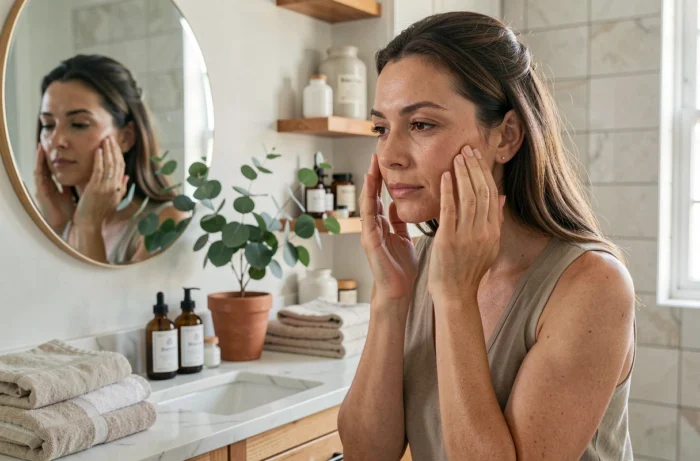
Fashion trends follow a seasonal rhythm (spring-summer and autumn-winter collections), and skin responds to the same weather cycles. In winter, dry air weakens the skin barrier, calling for richer skincare textures. Foundations and powders chosen in summer become unsuitable: adjusting your beauty kit for each season helps avoid visible mismatches between your complexion and outfit.
Your makeup colours can also complement the dominant palette in your seasonal wardrobe. An autumn-winter collection dominated by burgundy, khaki and camel naturally pairs with warm-toned lips rather than a bright summer red.
Lifestyle and fashion inspiration: filtering out the noise online
Fashion, beauty and lifestyle content runs into the millions. The problem is not a lack of inspiration, but too much of it. To turn this flood of content into practical choices, you need a way to filter it.
The first step is to identify sources that suit your body shape, budget and lifestyle. Lifestyle content created for someone living in a city centre with a generous fashion budget will offer different recommendations from content aimed at someone whose daily life is based in the suburbs.
The second step is sorting through the trends. Not every trend works for everyone, and a distinctive style depends as much on what you reject as on what you embrace. Looks spotted on social media are starting points to adapt, not templates to copy.
- Choose one statement piece from a trend rather than recreating an entire look seen online
- Prioritise trends that work with items already in your wardrobe
- Calculate the cost per wear (price divided by the number of times you expect to wear the item) before buying
The most useful fashion and beauty tips are those that reduce the number of decisions you have to make each morning. A streamlined wardrobe built around a few colours that work together, along with a beauty routine settled on five to seven products, creates a clear, repeatable style without requiring too much daily effort.
Personal style does not emerge from accumulating trends or products. It is built by subtraction: keeping what works, removing what complicates things and adapting the rest to the realities of everyday life.