Accommodation classified as “unusual” does not fall into any standalone regulatory category under French urban planning law. Depending on the structure’s physical characteristics and location, the applicable rules may cover leisure dwellings, mobile homes or campsites, with permit requirements varying from one project to another (French Urban Planning Code, Articles R111-32 to R111-35). This legal reality directly affects the quality and actual environmental impact of unusual stays in the heart of the French countryside.
Legal status of unusual accommodation in France: what the Urban Planning Code requires
Yurts, treehouses, transparent bubbles and caravans: each type of structure is subject to different rules governing where it can be installed. A stilt house fixed to the ground may require a building permit, while a towable caravan falls under the rules for mobile leisure homes, which are subject to different installation requirements.
Both operators and travellers often get confused. The term “unusual” does not grant any exemption: accommodation remains subject to the municipality’s planning rules, its local urban development plan and, in some cases, the requirements that apply to protected areas. Any installation, however lightweight, may be prohibited at a site of outstanding natural beauty.
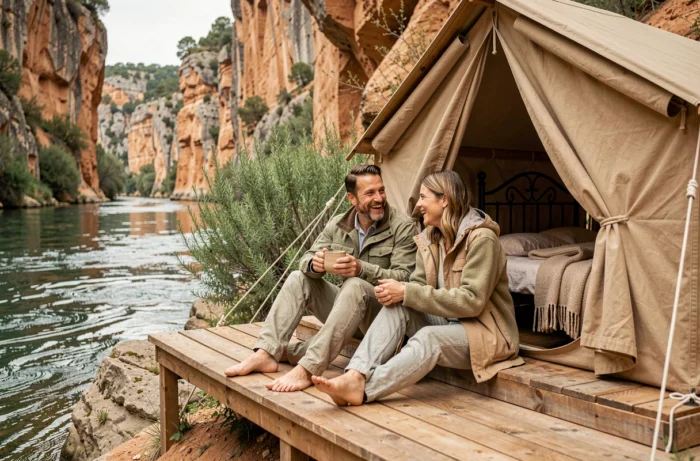
For fans of bivouacking or micro-adventures, camping outside a designated campsite is not permitted everywhere. The Urban Planning Code prohibits it in protected areas (the coast, the surroundings of historic monuments and classified sites) and allows municipalities to restrict the practice to protect natural habitats or landscapes. Checking local regulations before pitching a tent is a practical necessity, not just a precaution.
Organising trips with Dormir En Roulotte means relying on accommodation whose administrative status and location have been approved in advance, avoiding this type of regulatory risk.
Nature stays and environmental responsibility: a misleading shortcut
Staying in a natural setting does not automatically reduce the environmental footprint of a trip. We regularly find that a stay’s environmental impact depends on factors rarely highlighted in promotional offers: whether the site is accessible without a car, its sanitation system, water consumption and the ecological sensitivity of the location.
Accommodation deep in a forest or in the mountains, with no public transport links, often means a longer car journey than a stay at a campsite on the outskirts of a town. The appeal of the setting can obscure this fact. Overall tourist numbers rose in the third quarter of 2025, according to Insee (up 2.9% year on year for collective tourist accommodation), but these figures cover the entire sector and do not show that unusual accommodation is becoming more environmentally friendly.
Three practical criteria can help you assess the true environmental impact of nature accommodation:
- How to reach the site: whether there is a train station, bus stop or shuttle service, or whether a private vehicle is needed for the final few kilometres.
- Sanitation and water management: dry toilets, connection to the public sewer system or a septic tank in a sensitive area—all of which can have a very different impact on the environment.
- Location in relation to environmental designations: a Natura 2000 site, regional nature park or nature reserve, each with associated restrictions on visitor numbers and development.
A stay in a caravan on farmland accessible via a departmental road may have a much lower environmental impact than a night in a transparent bubble perched in the middle of a protected wetland.
Unusual accommodation in France: choose a nature stay to suit the setting
When choosing unusual accommodation, it is worth focusing on the surrounding environment rather than just the structure’s design. The terrain determines both the practical constraints and the actual experience of the stay.
Plains and bocage countryside
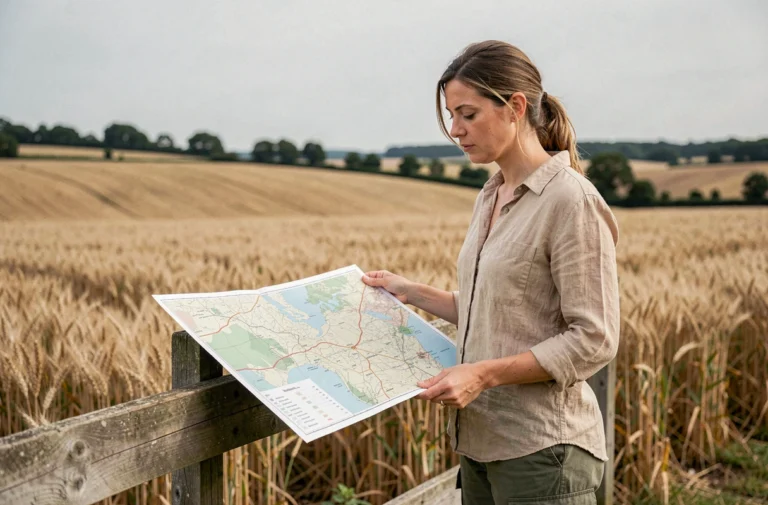
Caravans, tiny houses and shepherd’s huts can be set up on farmland or in natural camping areas. Access is generally straightforward, and utility connections may be available. The wildlife you can spot (birds of prey, roe deer and pollinating insects) depends on how neighbouring land is managed. Choosing a site bordered by hedgerows or permanent grassland can make for a more biodiverse stay.
Forests and mid-altitude mountains
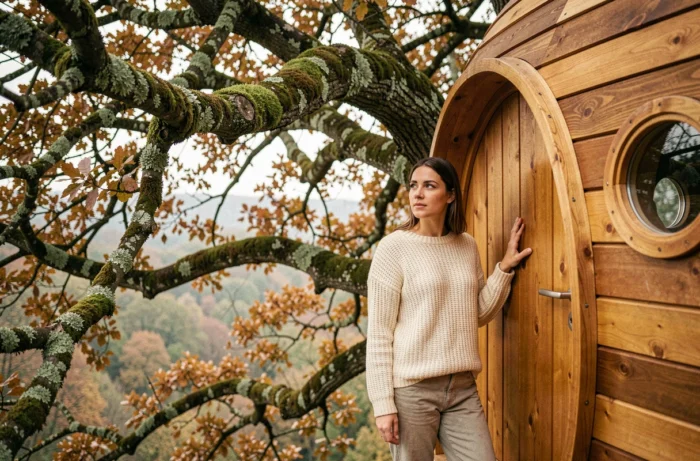
Treehouses and suspended tents offer an immersive experience, but damp, wind and distance from utility networks make logistics more challenging. Without permanent bathroom facilities, self-sufficient solutions are essential (dry toilets, solar showers). The shoulder season is worth considering: Insee reported a year-on-year increase in stays at collective accommodation other than campsites in the second quarter of 2025 (up 5.4%), suggesting that more and more travellers are heading to these nature destinations in spring.
Coastlines and wetlands
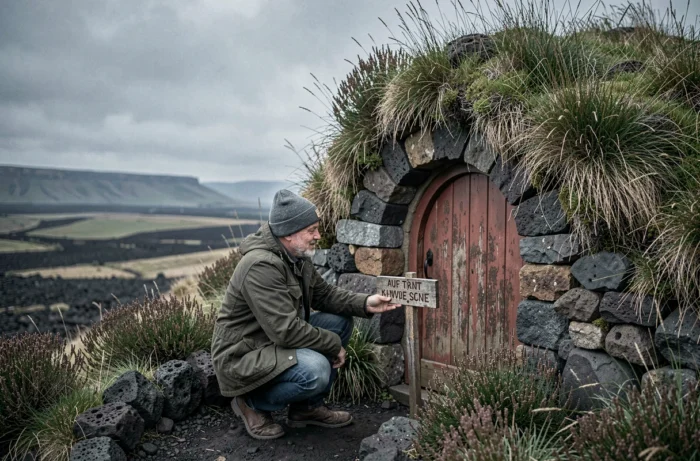
Regulatory restrictions are strictest in these areas. The Coastal Act, biotope protection orders and Natura 2000 boundaries severely limit where accommodation can be installed. Unusual accommodation by the sea or in a marsh must have up-to-date permits. Tourism in fragile environments calls for vigilance that an idyllic setting can make easy to forget.
Nature stays in unusual accommodation: what to check before booking
Before booking a night in a treehouse, yurt or caravan, a few practical checks can make the difference between a great experience and a disappointment:
- Check that the operator clearly states the accommodation’s legal category (leisure dwelling, mobile home or registered campsite pitch), rather than relying on a self-awarded label.
- Ask about cancellation terms in bad weather: an open-sided accommodation option (such as a bubble or safari tent) with no alternative in a thunderstorm could mean a sleepless night, not an adventure.
- Check how accessible the site really is: the distance from the nearest train station or public transport stop, whether the access track is passable in the rain, and whether you will need to carry your luggage if your vehicle cannot get close.
- Find out how waste and water are managed: a site with no recycling facilities or nearby drinking water is not responsible nature accommodation—it is disguised wild camping.
A successful unusual stay depends as much on the operator’s transparency as on the charm of the location. A holiday in the heart of the French countryside offers a genuine break from everyday life, provided the regulatory framework and practical arrangements have been checked in advance. Getting away from it all is no excuse for cutting corners.