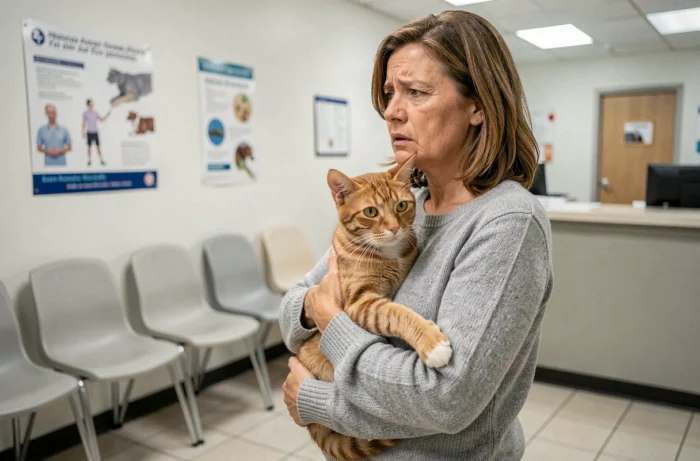
Your cat is suffering, you call the nearest veterinary clinic and are met with a refusal for care. The situation is stressful, but it is not without resolution. The veterinary code of ethics precisely outlines the cases in which a practitioner can refuse to treat an animal and sets clear obligations in situations of peril. Understanding these rules allows for quick action to protect your cat.
Obligation of care in case of peril: what the code of ethics really imposes
The veterinary code of ethics clearly distinguishes between life-threatening emergencies and routine consultations. The veterinarian must strive, within the limits of their capabilities, to alleviate the suffering of an animal in peril.
Specifically, if your cat arrives in respiratory distress or after an accident, the practitioner cannot simply close the door. They must at least stabilize the animal or direct you to a facility capable of intervening. The key phrase here is “within the limits of their capabilities”: a practice without resuscitation equipment is not required to perform major surgery, but they must arrange for a transfer.
Outside of life-threatening emergencies, the situation differs. A veterinarian can legitimately decline to treat an animal for reasons of specialization (a complex pathology requiring specific technical resources), relational conflict with the owner, or organizational conditions (full practice, lack of availability). In the case of refusal of veterinary care for a cat, the practitioner is nonetheless obliged to justify their decision and, if possible, to propose an alternative.
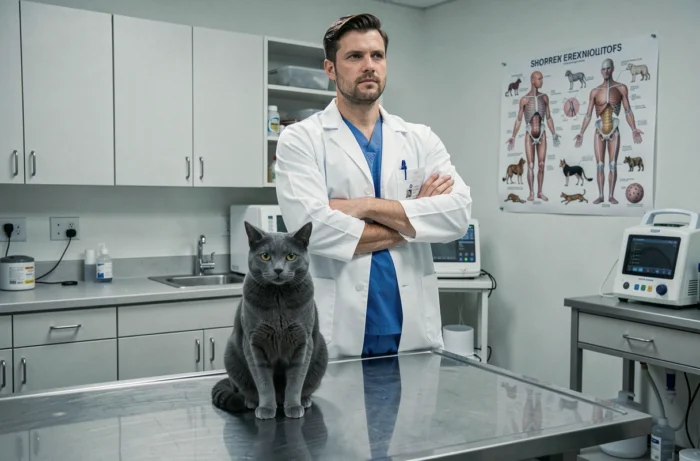
Abusive refusal or legitimate refusal: how to tell the difference
Not all refusals are equal. A veterinarian who refuses to treat your cat because they lack the appropriate equipment acts in the animal’s best interest. A practitioner who refuses without explanation, without a transfer proposal, and without consideration for the cat’s health poses an ethical problem.
Here are the criteria that allow for the evaluation of the legitimacy of a refusal:
- Medical or technical reason: the veterinarian explains that the pathology exceeds their skills or equipment and directs you to a colleague or a veterinary hospital.
- Documented organizational reason: the practice is closed, overwhelmed, or the practitioner is already engaged in another procedure. They indicate another point of contact.
- Notified relational reason: the veterinarian has previously informed the owner, preferably by registered mail, that they no longer wish to provide care to their animals, in accordance with the procedure outlined by the code of ethics.
A refusal without justification, accompanied by no direction to a colleague, may constitute a breach of the code of ethics. This point is particularly sensitive when the animal is visibly suffering.
Concrete recourse in the face of a refusal of veterinary care
Direct dialogue and written request
The first step remains to ask the veterinarian for a written explanation of their refusal. This record will be useful for any follow-up on the case. This request can be made by registered mail with acknowledgment of receipt, precisely describing the situation and the cat’s health status.
Contacting the regional council of the Order of Veterinarians
The Order of Veterinarians is the main point of contact in case of ethical disputes. Any owner can contact the regional council of the Order to report a breach. The complaint must be substantiated: date and time of the refusal, condition of the animal, exchanges with the practitioner, any potential witnesses.
The regional council can summon the veterinarian, investigate the case, and if the breach is confirmed, impose disciplinary sanctions. The procedure is free for the complainant.
Civil liability and legal recourse
If the refusal of care has led to a deterioration in your cat’s health, or even its death, the veterinarian’s civil liability may be engaged. It must then be demonstrated that there is a link between the refusal and the harm suffered. Keeping the medical record, invoices from subsequent care, and any written exchanges significantly strengthens the case.
To retrieve your cat’s medical record from a former veterinarian, the request must be made in writing. The practitioner is obliged to provide the necessary information for the continuity of care.

Injured stray cat: the unknown role of the town hall
The situation changes radically when the cat has no identifiable owner. Article R. 211-11 of the Rural and Maritime Fishing Code stipulates that the mayor must organize the care of injured stray animals, including outside the opening hours of the pound.
If you find an injured stray cat and no veterinarian agrees to treat it without a guarantee of payment, contacting the town hall is a relevant step. Depending on whether the animal is identified or not, and whether there is an agreement between the municipality and a veterinary practice, the financial coverage varies. In any case, the town hall serves as an often underestimated operational relay.
Pet health insurance and prevention of financial blockages
The refusal of care is sometimes related, in practice, to a perceived solvency issue by the veterinarian. Having a pet health insurance policy facilitates quick care. Insurance generally covers consultations, surgical interventions, and hospitalizations according to the subscribed guarantees.
Check the conditions of your contract before an emergency situation: waiting period, annual cap, breed or age exclusions. An owner who can attest to active coverage removes a common barrier in the relationship with the veterinary practice.
Requesting a written explanation, contacting another practitioner or an emergency veterinary center, and compiling a case if the refusal seems unjustified: these three steps help protect your cat while preserving your recourse with the Order of Veterinarians or in court.