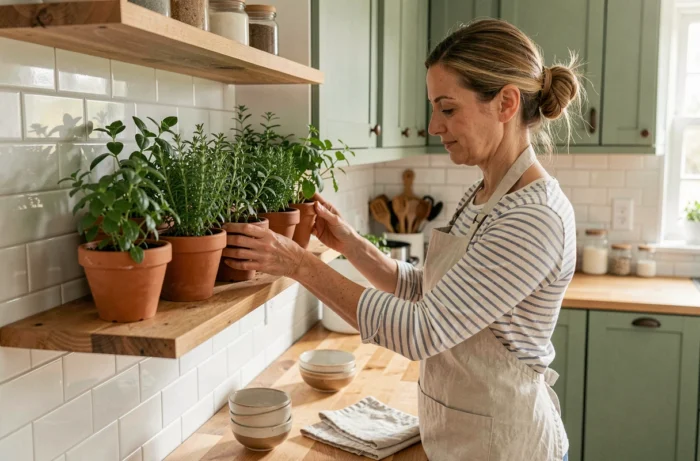
Designing an interior is about more than choosing a style from a catalogue. Every decision, from the flooring to the placement of a light fixture, changes how a space works in everyday life. The most useful home improvement advice starts with a technical constraint or a real-life need, not a trend.
Indoor air quality and material choices: the factor décor overlooks
Interior design affects occupants’ health as much as their visual comfort. The Île-de-France Regional Health Agency (ARS) points out that furniture, building materials, mould and household cleaning products all contribute to indoor air pollution. Particleboard, solvent-based paints, installation adhesives: every material releases volatile organic compounds into the living space.
Ventilating your home daily remains the most effective measure. Making sure the mechanical ventilation system (VMC) is working properly is just as important, especially after renovation work that changes how airtight the rooms are.
In a rental property, routine ventilation maintenance is often the tenant’s responsibility, not the landlord’s. Cleaning the extractor vents in the kitchen and bathroom is one of the maintenance tasks to build into your routine, just like descaling the taps.
Before choosing furniture or flooring, check the emissions rating (A+ label) to avoid introducing another source of pollution. We recommend choosing water-based finishes and solid wood or low-emission certified wood, including for shelves and closed storage units where air circulation is limited.
Room-by-room design: balancing space, light and flow
Browsing Déco Maison’s home improvement advice makes it easy to spot the most common proportion mistakes, particularly choosing a sofa that is too large for the living room.
Living room: keep walkways clear
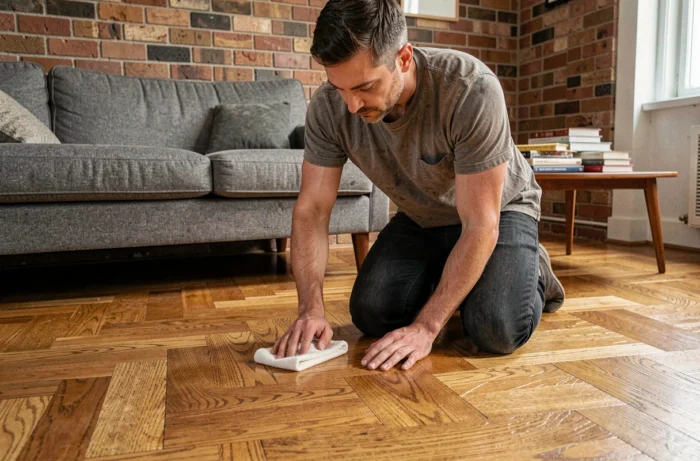
A functional living room has a sufficiently wide walkway between each piece of furniture and the wall or adjacent item. Position the sofa first, facing the main source of natural light. Add extra seating (an armchair or ottoman) afterwards, taking conversation distance and access routes into account.
Living room lighting works best when spread across several points: a pendant light for general ambience, a reading lamp beside the seating, and indirect lighting (an LED strip behind a low cabinet) to adjust the mood in the evening.
Kitchen: prioritise the work area over décor
Kitchen design is based on the work triangle between the sink, cooktop and refrigerator. Reducing the distance between these three points cuts down on fatigue and unnecessary trips. Decorative features (a patterned backsplash, open shelving) should fit in without encroaching on the available worktop space.
Upper cabinets, which are often underused, can store small appliances and occasional-use dishes. Clearing the worktop is the most noticeable way to improve a kitchen’s appearance.
Bathroom: ventilation and waterproof finishes come first
A poorly ventilated bathroom can develop mould within a few months, no matter how much you spend on décor. Check that the VMC is drawing air properly and choose paint designed for damp rooms (glycero-resin or reinforced acrylic) to protect the walls over time.
For bathroom furniture, choose raised legs or wall-mounted units: they make the floor easier to clean and help prevent moisture from lingering.
Colours and style: create a cohesive palette without getting stuck
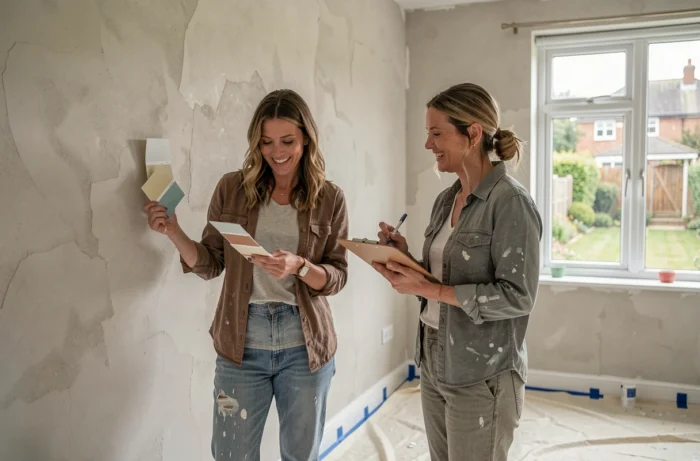
Colour is the least expensive and most transformative way to change an interior. A palette of no more than three shades per room is enough to define the space without creating visual clutter: one dominant colour (walls, floor), one secondary colour (furniture, curtains) and one accent (cushions, accessories).
Neutral shades (off-white, greige, taupe) make versatile base colours, but they only work when grounded by contrast. An accent wall in a muted shade (sage green, slate blue, terracotta) adds depth without locking you into a dated style.
- Test the colour in real conditions: paint a sample on part of a wall and observe it at different times of day, as natural light can dramatically change how a shade looks.
- Match the woodwork and skirting boards to either the walls or the floor, never to a third element, to avoid a patchwork effect.
- Use the same base white (same colour reference and finish) in all circulation areas (hallway, entrance, landing) to create visual continuity.
Personal style is built by taking things away, not adding more. Removing one decorative item from each flat surface is often more effective than adding another.
Renovation and financial assistance: distinguish comfort from energy efficiency
When a design project involves insulation, heating or ventilation, it is worth looking into financial assistance. Remodelling a kitchen or redecorating a living room does not qualify for MaPrimeRénov’: this grant covers energy-efficiency improvements (insulation, heating system replacement), not comfort or décor expenses.
A clarification published by 20 Minutes in October 2026 clearly distinguishes between the two categories. Eligibility requirements vary depending on the type of work and the assistance scheme selected. Check them before starting work to avoid building your budget around a grant that will not come through.
Regulations are increasingly favouring comprehensive renovations over isolated improvements. Homeowners planning to redesign several rooms should check whether adding insulation work (in the attic or windows) could make the project eligible for a supported scheme, while also improving the thermal comfort of the redecorated space.
- Attic insulation or window replacement: eligible subject to conditions.
- Paint, flooring, furniture: not eligible, regardless of material quality.
- Installing a double-flow VMC system: potentially eligible as part of a comprehensive renovation scheme.
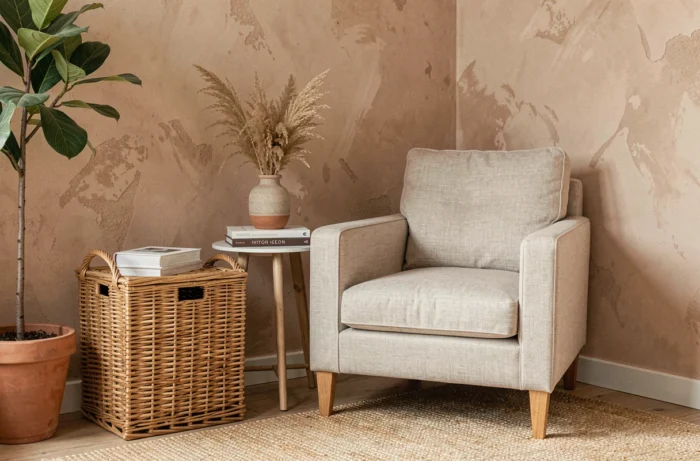
A well-designed interior comes down to practical choices: healthy materials, easy movement, a considered palette and a realistic budget. Technical decisions have a far greater impact on how long the results last than the latest trend. Each room should be treated as a system in which air, light and use guide decisions before aesthetics.