
Selling vintage clothing online seems simple: buy a second-hand item, photograph it, and list it for sale. In practice, the profitability of an online vintage shop depends on very specific sourcing, pricing, and merchandising decisions. Every choice made before clicking “publish” affects the final margin.
Legal status and regulatory requirements for an online vintage shop
Before talking about fashion or aesthetics, you need to deal with the paperwork. Anyone regularly selling vintage clothing must register their business. Micro-entrepreneur status is the most common option for getting started, but it can quickly become restrictive as sales volume grows.
One point deserves particular attention: extended producer responsibility for textiles (EPR). In France, any business that places textiles on the market must contribute to an eco-organization. A legal distinction applies to second-hand items sold “as is.” Clothing that is simply reused is not subject to the same requirements as new items.
However, if you transform your pieces (upcycling that combines new materials with reclaimed textiles), the rules remain unclear. The status of these hybrid creations has not yet been settled at the European level. Check this before launching an upcycled collection, or you may have to pay outstanding contributions later. An article detailing the profitability of vintage clothing on Buzzorama explores these financial and regulatory aspects.
Another development to keep an eye on is the digital product passport for textiles, provided for under the European ESPR regulation (EU Regulation 2024/1781). This system aims to improve product traceability, but it does not solve the problem of vintage items with no original label. For a vintage shop, documenting provenance and composition remains a manual task.
Sourcing vintage clothing: finding pieces that will sell
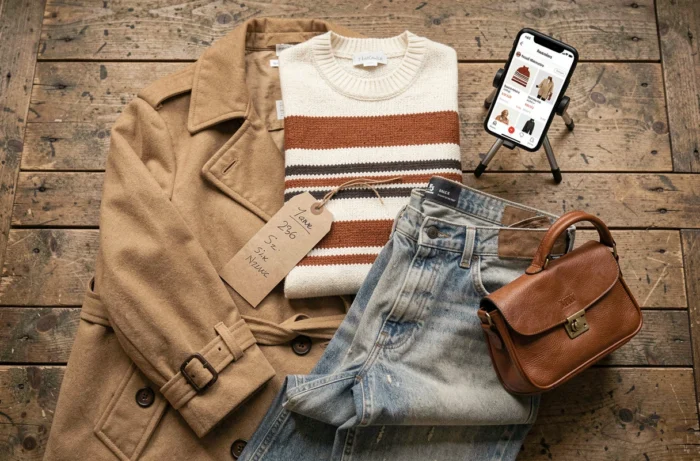
Sourcing is the key to success. Have you noticed how some vintage shops always have sought-after pieces, while others accumulate stock that just sits there? The difference rarely comes down to luck.
Wholesalers, bundles, and end-of-line stock
Wholesalers specializing in vintage clothing sell bundles sorted by category (sportswear, denim, knitwear) or quality (grade A, B, C). How items are sorted upfront determines your margin: a “grade A” bundle costs more per kilo, but each item has a higher resale value. An unsorted bundle means you have to absorb the cost of unsold items.
Some resellers also turn to end-of-line stock and factory surplus. These items are not strictly “vintage,” but they can round out a catalog and help maintain cash flow between deliveries of older pieces.
Local sourcing and hand-picking
Flea markets, garage sales, and charities remain viable sources of individual pieces with high added value. The time spent hunting for items is an invisible cost. Factor it into your cost price, or your margin will shrink without you understanding why.
- Track the time spent on each sourced item (travel, sorting, cleaning) and set a minimum hourly profitability threshold.
- Focus on categories you know well: military jackets, raw denim, 90s knitwear. Specializing speeds up sorting and strengthens your shop’s credibility.
- Build a network of regular suppliers rather than relying on a growing number of one-off sources. Consistent stock helps build customer loyalty.
Setting the selling price for a vintage garment
Set the price too low and you kill your margin. Set it too high and your stock won’t move. The right price reflects rarity, condition, and actual demand—not a rough guess.
Start by checking actual selling prices (not asking prices) on second-hand platforms. Filter by “sold items” to see what buyers are really willing to pay. A Levi’s denim jacket from the 80s in good condition won’t sell for the same price as a similar model with stains or a tear.
Pricing guide by category
Create an internal pricing guide. For each category (tops, bottoms, jackets, accessories), set a floor price, a median price, and a ceiling price. Adjust them based on three criteria:
- Brand and decade of manufacture: a piece that collectors can identify will sell for more than a generic item.
- Actual condition: be precise in your description. Mentioning a tear upfront can prevent a return and a bad review.
- Seasonality: vintage coats sell better between September and January. Listing an overcoat in July means tying up stock for four months.
Photos and descriptions: what drives online purchases
When shopping online, buyers can’t touch the fabric. Photos and descriptions take the place of trying items on. A blurry photo or cluttered background puts buyers off faster than a high price.
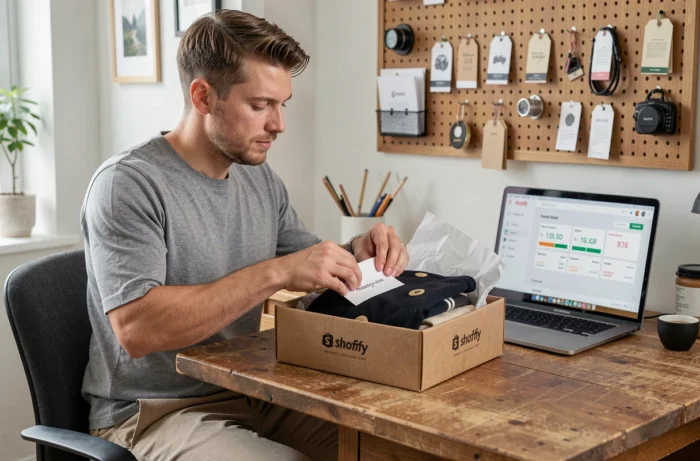
Take photos in natural light against a neutral background (a white wall or a simple clothing rack). Include at least four angles: front, back, label detail, and any flaws. Vintage buyers are looking for authenticity, not perfection. Honestly showing a minor flaw is more reassuring than suspicious silence.
Writing a product listing that converts
Your description should include the information buyers type into the search bar: brand, material, size, estimated decade, and color. Add actual measurements taken with the garment laid flat (chest and length). Vintage sizes don’t match modern sizing, and this is the leading cause of returns for these items.
Avoid flowery descriptions. “Beautiful piece full of character” doesn’t tell buyers anything. “Wool-blend jacket, straight cut, defined shoulders, estimated French-made, 80s, labeled size 42 (fits a modern 38–40)” gives them a reason to click “buy.”
The success of an online vintage clothing shop comes down to consistently getting these operational details right. Every well-sourced, correctly priced, carefully photographed item helps build a reputation. This consistency, more than any marketing trick, is what turns an online vintage shop into a profitable long-term business.