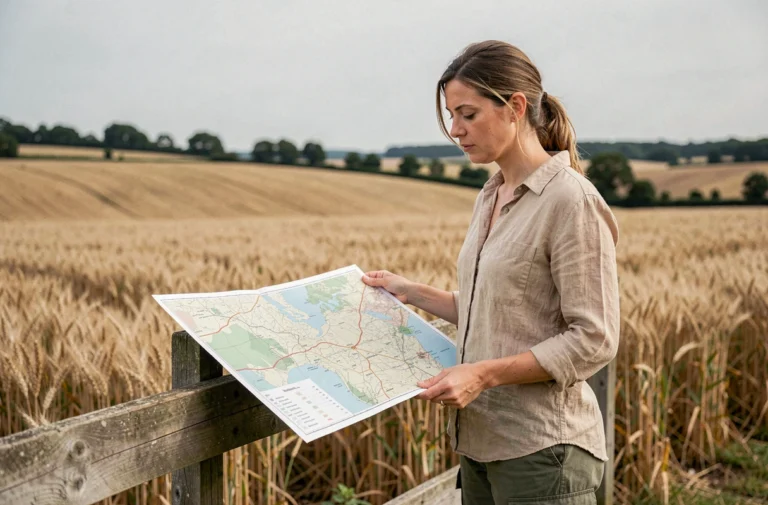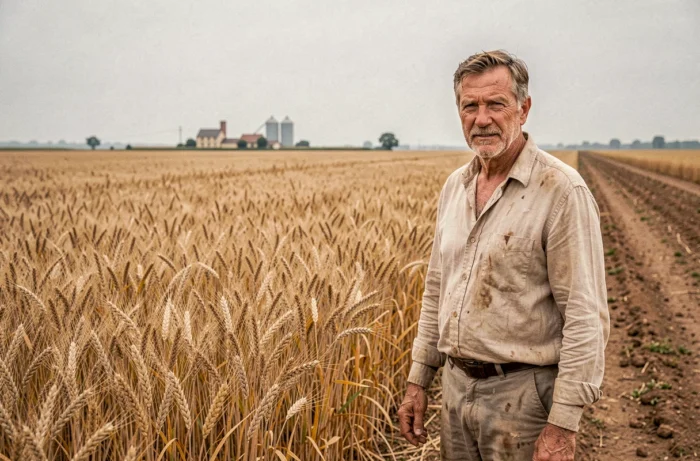
In France, the average area of farmland per holding now exceeds the levels recorded twenty years ago, according to Insee data. Land concentration is accelerating, corporate structures are becoming more common, and it is increasingly difficult to determine who actually operates the country’s largest farms. Behind a family name or company name, complex legal arrangements blur the picture.
Why it remains difficult to identify the owner of France’s largest farm
The difficulty starts with a question of definition. To talk about the largest farm, you first have to choose a measure: cultivated area, livestock numbers, revenue or number of employees. The ranking changes depending on which one you use.
In addition, corporate structures make it harder to identify the actual operator. A single family may control several EARLs, GAECs or SCEAs across different departments, without any one of them standing out individually as a giant. Insee notes that this shift toward corporate structures is gaining ground, particularly among larger farms.
When looking for France’s largest farm, you also run up against the lack of a consolidated public register. Agricultural census data cover economic units, not family groups or holding companies. An operator with stakes in three companies covering several thousand hectares does not appear anywhere as a single entity.
French farms covering 2,000 hectares: large-scale crop farming in Picardy and Beauce
Among the names that regularly crop up in the agricultural press, the Pouyet family is often mentioned. Their farm in Moselle is sometimes described as “the largest farm in France.” A report by Moselle TV uses this label, but does not specify the exact area farmed or the legal structure behind the operation.
The symbolic 2,000-hectare threshold is what draws media attention. A widely shared video features a French farm covering this area and specializing in large-scale crop farming. Farms of this size remain rare: the vast majority of French farms are much smaller.
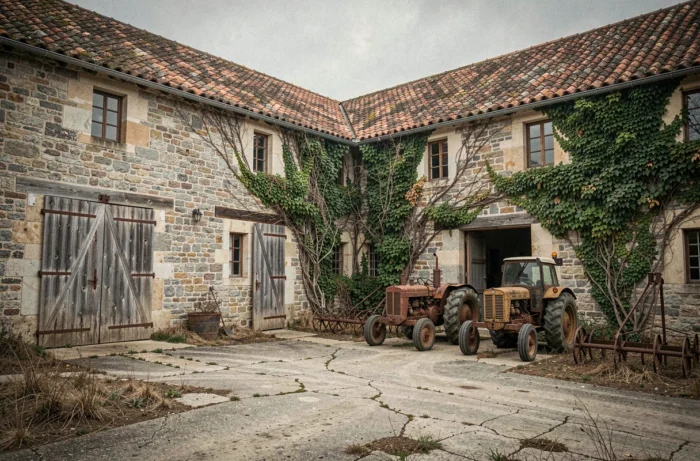
These very large farms are concentrated in the cereal-growing plains of northern France. Picardy, Beauce and parts of Champagne are home to the largest operations by area. Their model is based on growing wheat, sugar beet and rapeseed, with extensive mechanization and relatively few employees for the area farmed.
Land concentration and the Sempastous law: the regulatory framework for large farms
The concentration of agricultural land is more than an economic phenomenon. It has become a political and legal issue. The Sempastous law strengthened oversight of transfers of shares in agricultural companies, with the aim of limiting expansions deemed excessive.
Before this law, transfers of shares in SCEAs and other agricultural companies largely escaped SAFER oversight. An investor could acquire thousands of hectares by buying company shares without the transaction being subject to a right of first refusal. This legal loophole fueled the growth of some giant farms.
The practical issues addressed by this regulation include:
- Oversight of share transfers in agricultural companies, which now account for a significant proportion of land transfers, particularly in areas devoted to large-scale crop farming.
- The role of SAFER, whose remit has expanded but whose resources remain limited relative to the volume of transactions.
- The distinction between land ownership and actual farming: an investor can own land through a company without ever cultivating it themselves.
Landholding arrangements add another layer of complexity. Local authorities, associations and specialist funds, for example, acquire land and make it available to farmers, sometimes across considerable areas. This mechanism does not appear in standard farm statistics.
The Thousand Cows Farm: the history and limits of a controversial model
One of France’s most widely publicized large-scale farming projects was the Thousand Cows Farm in the Somme. The project combined intensive dairy farming with anaerobic digestion, with a planned herd far larger than those typically found in the region.
Local opposition, administrative proceedings and mobilization by environmental groups meant that the project never reached its planned capacity. Its trajectory illustrates a constraint specific to the French context, where public acceptance of mega-farms remains low compared with other European countries.
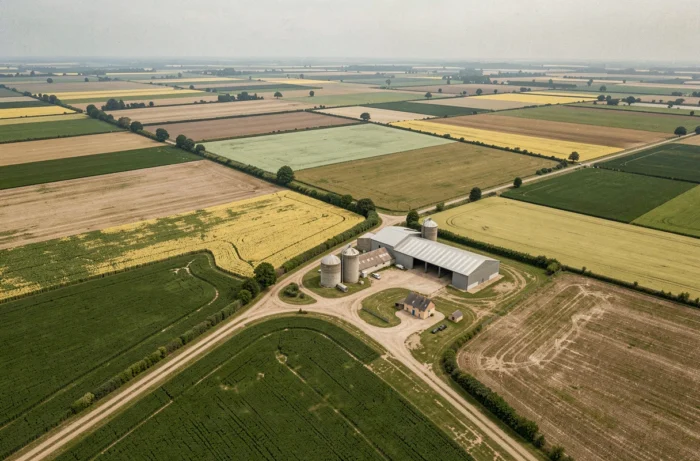
The Thousand Cows Farm was not defined by the area under cultivation, but by the volume of animal production. Its inclusion in the debate over the “largest farms” shows just how much the criteria vary depending on who is speaking.
Land area, livestock or revenue: how should the size of a farm be measured?
No public database makes it possible to rank French farms by overall size. Insee’s agricultural census provides aggregated data by area bracket or type of farming, but no named ranking.
Three criteria coexist, without necessarily overlapping:
- Utilized agricultural area, which favors cereal growers in the plains of northern and central France.
- Livestock numbers, which highlight intensive farms in the west of France or Picardy.
- Revenue, which favors wine-growing operations, particularly in Champagne and Bordeaux, where a few hectares of vines can generate more income than thousands of hectares of wheat.
A vineyard of just a few dozen hectares can carry more economic weight than a 2,000-hectare cereal farm. This makes it impossible to give a straightforward answer to the question of which farm is the “largest.”
Land concentration in France remains moderate by European standards, but it is increasing. The available data do not make it possible to identify a single owner of the country’s largest farm. What is emerging, however, is an agricultural landscape in which size is measured less and less in hectares and increasingly in company shares.