
The varicella-zoster virus (VZV) remains latent in sensory nerve ganglia after the primary infection. Its reactivation depends on a balance between the latent viral load and the specific T-cell immune response. When this specific immunity declines, VZV resumes replication along the dermatome corresponding to the affected ganglion, producing the characteristic vesicular rash of shingles.
T-cell immunity against VZV and reactivation threshold
It is the drop in specific T-cell immunity that allows for the reactivation of VZV, not an exogenous reinfection. The virus, residing in the spinal or cranial ganglia, maintains residual transcriptional activity that memory T lymphocytes continuously contain.
In an immunocompetent individual, intense physiological stress, an intercurrent infection, or prolonged fatigue can be enough to temporarily lower this surveillance. Therefore, shingles is not limited to immunocompromised patients.
The density of latent virus varies from one ganglion to another in the same individual. A ganglion with a high latent viral load requires less immune failure to trigger reactivation. This explains episodes of shingles in patients whose overall immune assessment remains within normal limits.
To better understand the causes of recurrent shingles, it is essential to integrate this notion of a variable threshold depending on the ganglia and the immune status at the time of reactivation.
Recurrent shingles: when to question the diagnosis
A recurrence labeled “shingles” is not always one. Diagnostic confusion with recurrent herpes simplex (HSV) is common in clinical practice. HSV can cause unilateral vesicular eruptions mimicking shingles, particularly in atypical thoracic or lumbar locations, with a recurrence rate much higher than that of VZV.

From the second episode labeled shingles, the question of differential diagnosis deserves to be raised. VZV only recurs in a minority of immunocompetent patients. Three or more episodes justify virological confirmation by PCR on vesicular sampling, the only test that distinctly differentiates VZV from HSV.
A new episode may affect a dermatome different from the previous one. The unilateral band-like appearance remains the main clinical criterion, but it does not allow for the identification of the virus responsible on its own.
Assessment to consider after several confirmed episodes
- Search for acquired immunodeficiency: HIV serology, lymphocyte count, immunoglobulin levels if the context warrants
- Review of ongoing treatments: prolonged corticosteroid therapy, immunosuppressants, chemotherapy, targeted biotherapies (anti-JAK, anti-TNF)
- Evaluation of the vaccination indication with Shingrix, including in patients who have already had shingles
This assessment is not required after a first isolated episode. It becomes relevant from the second episode confirmed by PCR, or from the first in a patient under 50 years old without identified risk factors.
Immunosenescence and shingles: a direct link with age
Age is the primary risk factor for VZV reactivation. Immunosenescence leads to a progressive decline in immune functions, primarily affecting the cellular component. Specific anti-VZV T lymphocytes decrease in number and functional capacity starting at age 50.
The incidence of shingles continuously increases with age and becomes particularly high after 70 years. The risk of post-herpetic neuralgia (pain persisting after skin healing) also progresses in this age group.
Any pathology that alters cellular immunity accelerates this decline: malignant hematopathies, organ transplantation, uncontrolled HIV infection.
Shingrix vaccination: current recommendations and previous shingles
The High Authority of Health recommends the recombinant Shingrix vaccine starting at age 65 in the general population, and from age 18 for immunocompromised individuals. Unlike live attenuated vaccines, Shingrix can be administered to immunocompromised patients, which precisely covers the population most exposed to recurrences.
A history of shingles is not a contraindication. It actually strengthens the vaccination indication, as recurrence remains possible. The vaccine aims to restore specific anti-VZV T-cell immunity above the reactivation threshold.
Practical points on post-shingles vaccination
- It is customary to wait for the complete resolution of the acute episode before vaccinating
- The vaccination schedule consists of two doses spaced two months apart
- The protective efficacy far exceeds that of the live attenuated vaccine, even in subjects over 70 years old
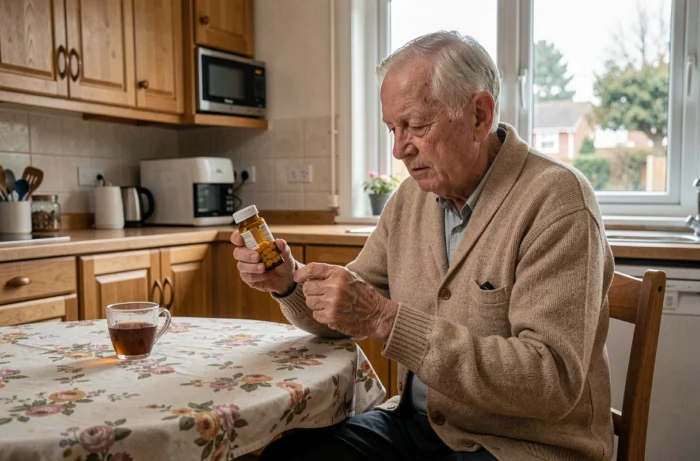
We observe that the issue of vaccination remains under-addressed in patients who have already experienced one or more episodes. The post-shingles consultation should systematically include a discussion about Shingrix, particularly in those over 65 and patients on immunosuppressive treatment.
Recurrent shingles is not a fatality. Confirming the diagnosis by PCR from the second episode, searching for a cause of immunodeficiency, and discussing vaccination represent the three concrete steps to reduce the risk of new episodes.